
Aesthetics
Skin rejuvenation
With modern, gentle techniques we support your skin's natural regeneration – for a fresh, well-cared-for impression.
Overview
Skin changes over time: cell renewal and collagen production slow down, sun and the environment leave their traces, and disposition has a say in how clearly that shows. Fine lines, loss of firmness and an uneven tone then make a face look more tired than it feels.
That is exactly where laser skin renewal starts: microscopically fine channels prompt the skin to repair itself and to build collagen. We work with the UltraClear™, a fractional cold laser — it removes skin at a wavelength that works virtually without thermal side effects. What you see is a finer skin texture, shallower lines and a fresher complexion; recovery takes hours to a few days, depending on the programme.
First the assessment, then the treatment
So what comes first is an assessment of your skin, not a treatment. At Sehklinik every aesthetic treatment rests on a medical foundation and is carried out under ophthalmological direction — which counts for most around the eyes, where the skin is thinnest and the anatomy beneath it calls for experience. Our approach is deliberately restrained: the aim is not a visible intervention but a fresh, natural impression — and an expectation that fits the findings.
The eyelid region in particular demands special care: because of its immediate proximity to the eyeball, laser treatment here presupposes precise knowledge of the anatomy and function of the eye. In the USA, laser treatment of the eyelid region has therefore become established as a subspecialty of oculoplastic surgery: oculoplastic surgeons are ophthalmologists with an additional specialised training of at least two years, completed with an examination.
They master both the surgical and the laser-based treatment options at the eyelid — and, should a complication arise, can treat its consequences at the eye itself. A recent expert consensus of dermatologists and ophthalmologists underlines the particular ocular risks of laser treatments close to the eye and the importance of ophthalmological expertise.
What you can realistically expect
What sun and time have left in the skin over decades cannot be erased with one or two treatments. Neither IPL nor the UltraClear™ laser is a procedure that resets everything at a stroke. What they do is something else, and in its result more lasting: they improve the skin step by step, session by session, and each treatment builds on the one before.
Pigment and vessels genuinely disappear; the connective tissue renews itself over months; ageing is set back a little and its further progress demonstrably slowed. Deep lines that have arisen from loss of volume remain — there are other procedures for those, and we tell you when they make sense. The aim is not a different face, but your face as it looks with healthy skin.
We are glad to establish in person which treatment suits your skin and what results can realistically be expected.
UltraClear™ laser
The UltraClear™ laser (2910 nm) has a particularly favourable side-effect profile compared with conventional ablative skin lasers and is, as far as we know, currently the only device of its kind in Switzerland.
An effect that goes beyond aesthetics: fractional laser treatments do not only renew the connective tissue, they also appear to restore the skin's ability to keep sun-damaged cells in check. In a study at the Massachusetts General Hospital of Harvard Medical School, patients who had already had a non-melanoma skin cancer on the face developed a new tumour in around 21 percent of cases after fractional laser treatment — without treatment it was 40 percent, over an observation period of more than six years.
The cause lies in the tissue itself: the laser treatment removes aged connective-tissue cells, and the young cells that grow back once again release the signal that stops damaged skin cells from dividing uncontrollably. The data are still young and come from observational studies; they replace neither sun protection nor skin-cancer screening. But they show that a treatment that keeps the skin younger also keeps it healthier.
There is more about the technique on the UltraClear™ laser page.
What a laser treatment changes in the skin — and what it does not
A laser treatment works on the skin itself: on its texture, its surface and its pigment. Fine lines, an uneven tone, sun damage, enlarged pores or individual scars are the findings it can address at all. It does not change where the eyelids sit, and it does not change how much skin rests above an eye.
That also says what it does not replace. Excess skin on the upper lid is a question for eyelid surgery rather than for the skin surface — described on the eyelid surgery page. And once slack lid skin narrows the field of view, it stops being an aesthetic question and becomes an ophthalmic finding; that assessment belongs in ophthalmology, under Eyelid malpositions.
Inside the skin, too, there are limits. The result builds over weeks rather than overnight, several sessions are usual depending on the goal, and skin ageing carries on afterwards — a treatment slows it, it cannot stop it. We would rather say so before the first session than after it.
One delimitation belongs here as well, because in a cosmetic setting the term is often used for skin rejuvenation: IPL, intense pulsed light. At Sehklinik it sits elsewhere — it belongs to ophthalmology, to the treatment of dry eyes when the meibomian glands are disturbed, and it is described there, on the page about treating dry eyes. We carry out this light treatment in Zurich, in the ophthalmic consultation. So IPL does not appear on this page as an aesthetic treatment; anyone thinking of it because their eyes burn and feel tired is better served by an ophthalmic consultation than by aesthetics.
How a treatment is planned
What comes first is a consultation, not a treatment. We look at your skin and ask about skin type, earlier treatments, skin conditions, medication that makes skin light-sensitive, and recent sun exposure. All of it feeds the decision whether to treat at all, and how cautiously to dose.
Out of that comes a written treatment and cost plan: which area, which intensity, how many sessions at what interval. Aesthetic skin treatments are self-pay — the amount is settled before you decide, not afterwards.
The days right after are part of the plan as well: depending on the programme the skin stays reddened for a few hours to a few days, and consistent UV protection belongs to that phase. And if another route fits your goal more closely — a surgical procedure, waiting, or no treatment at all — we say so in the consultation.
Related topics
Related conditions
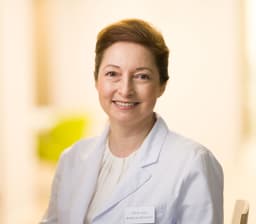
Medically reviewed by PD Dr. med. Andrea von Rückmann
Frequently asked questions
- A simple test: if what bothers you is the quality of the skin — fine lines, tone, texture — this page is the right way in. If what bothers you is skin resting above the eye and making the lid look heavy, that is a question for eyelid surgery and is covered there. The two often come together; which order makes sense is something we discuss in the consultation, before anything is planned.
- No. Aesthetic treatments of the skin are self-pay, and you receive a written cost breakdown in advance. It is different when an eyelid finding is functionally relevant and narrows the field of view: that is an ophthalmic question. It is assessed with a standardised visual field measurement and photo documentation and submitted as a request for cost approval; the decision is the insurer's, not the clinic's. That route runs through the eyelid malposition consultation, not through aesthetics.
- The most useful things are the ones we cannot see: skin conditions, earlier treatments on the skin, medication — especially anything that makes skin light-sensitive — a pregnancy, and a recent tan. Come without make-up if you can, and bring, in your own words, what it is about your skin that bothers you. Whatever follows from that we put in writing before any treatment starts.
- No, and a page that says otherwise is promising more than it can hold. After a treatment the skin renews itself over weeks; then it ages on, and sun, smoking and sleep keep their say. How long an effect carries depends on the starting point, on the programme chosen and on your own skin care. If you want to keep the fresher impression, plan for repeat sessions; what that means is set out in the cost plan.
Consultation first, treatment second — in that order.
What comes first is a consultation, not a treatment. We look at your skin, tell you which treatment makes sense — and which does not — and you receive a written treatment and cost plan before anything starts.
+41 44 500 69 00 — Mon–Fri 08:00–12:00 / 13:00–17:30. Or Request a consultation online.